
When is a movement more than the sum of its parts? There are many answers to that but the most useful, if banal, is this: when it drives the hands to deliver the most steady rate possible, while encased within the protective shell of a case. Before this, a movement is just a rebel in search of a cause, if you will; we can manage a better metaphor here. When you think of motor racing, you might consider if you would prefer looking at the engine and studying its awesome structure as an exhibit, or if you would rather see it power a race car, as it should.
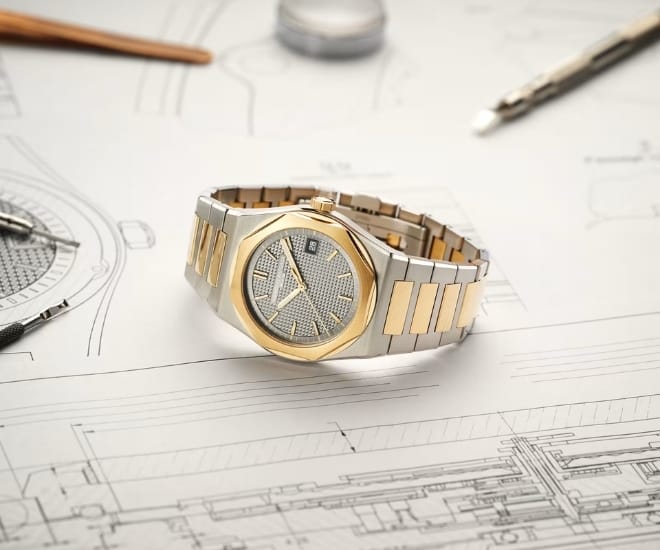
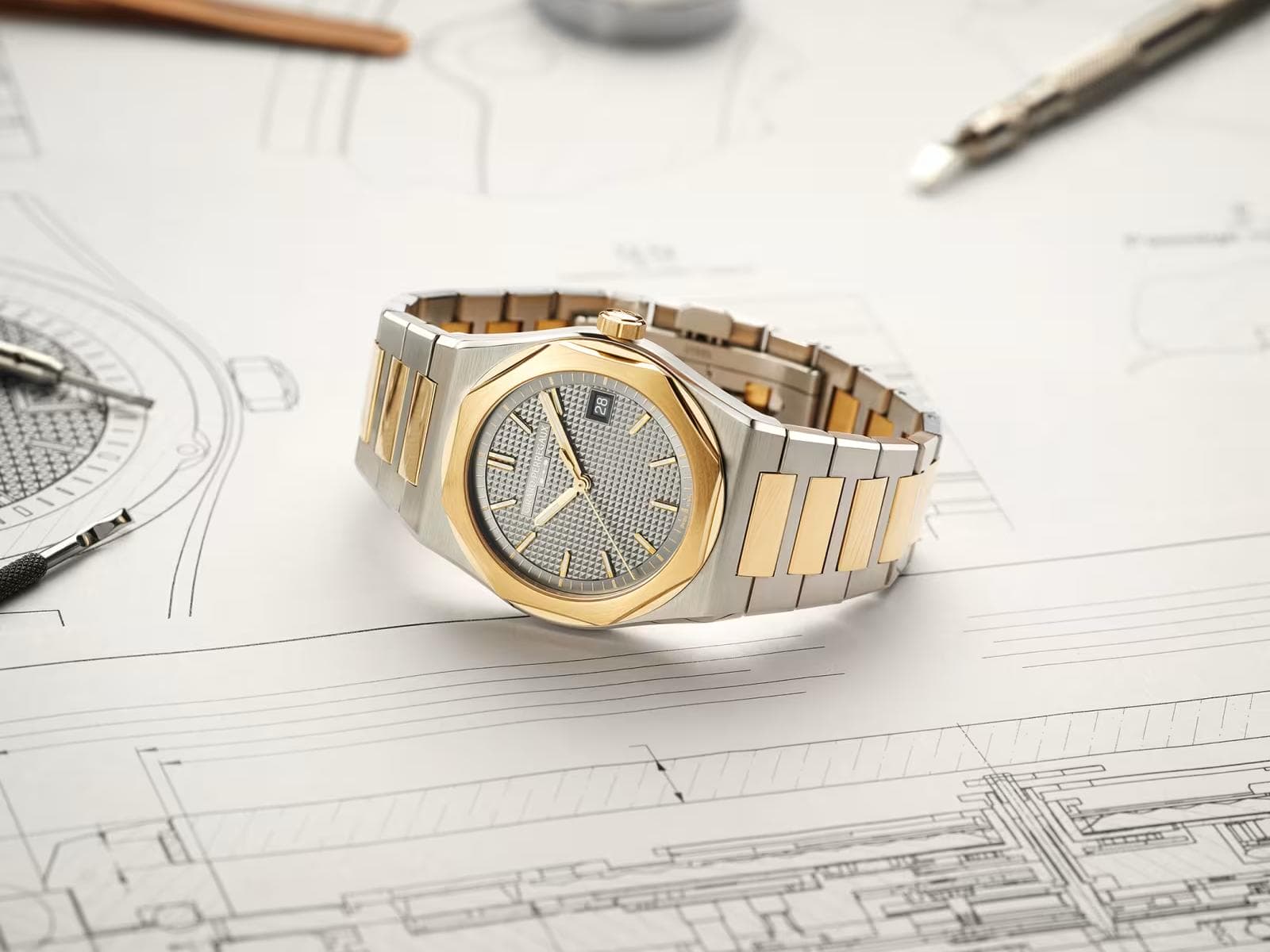
All this preamble is just a way of pointing out the obvious: watch brands have good reasons not to present movements independently, at least for the public’s eyes. With the new Calibre GP4800, Girard-Perregaux scraped that particular bit of the playbook. It introduced the movement and then the watch, and we followed that path online too. Well, the big reveal is all done, so to speak, and we can properly talk up the Laureato Fifty, the latest iteration of a model that has been a winner for Girard-Perregaux since 1975. Yes, if you had not guessed, the date explains the name, and it may certainly put you in mind of other watches that also celebrated similar milestones in recent years. Girard-Perregaux Managing Director Marc Michel-Amadry points out that the Laureato was not merely a trendy watch, even at launch, but really a trendsetter, and we will get to that in a moment.
On that note, Michel-Amadry took us through the movement and the watch when we met earlier this year. We also published an interview with him in the Autumn issue, where we covered a lot of ground on the Laureato Fifty (which we will continue to address this way, or simply as the Fifty). So, what can you expect from the watch? Let us look again at Calibre 4800 then.
So, what actually is happening here with the new movement? It is certainly nothing like the debut of the Constant Escapement L.M. in 2013 because GP4800 is a Swiss lever automatic movement. Unlike a calibre that deploys radically different technical solutions, GP4800 is ready to go right from the start. It boasts compact dimensions, being just 25.6 millimetres in diameter and 4.28 millimetres thick and is envisioned as the base for future complications. Looking at the movement, there is a clear callback to the architecture of the brand’s iconic Three Gold Bridges design.
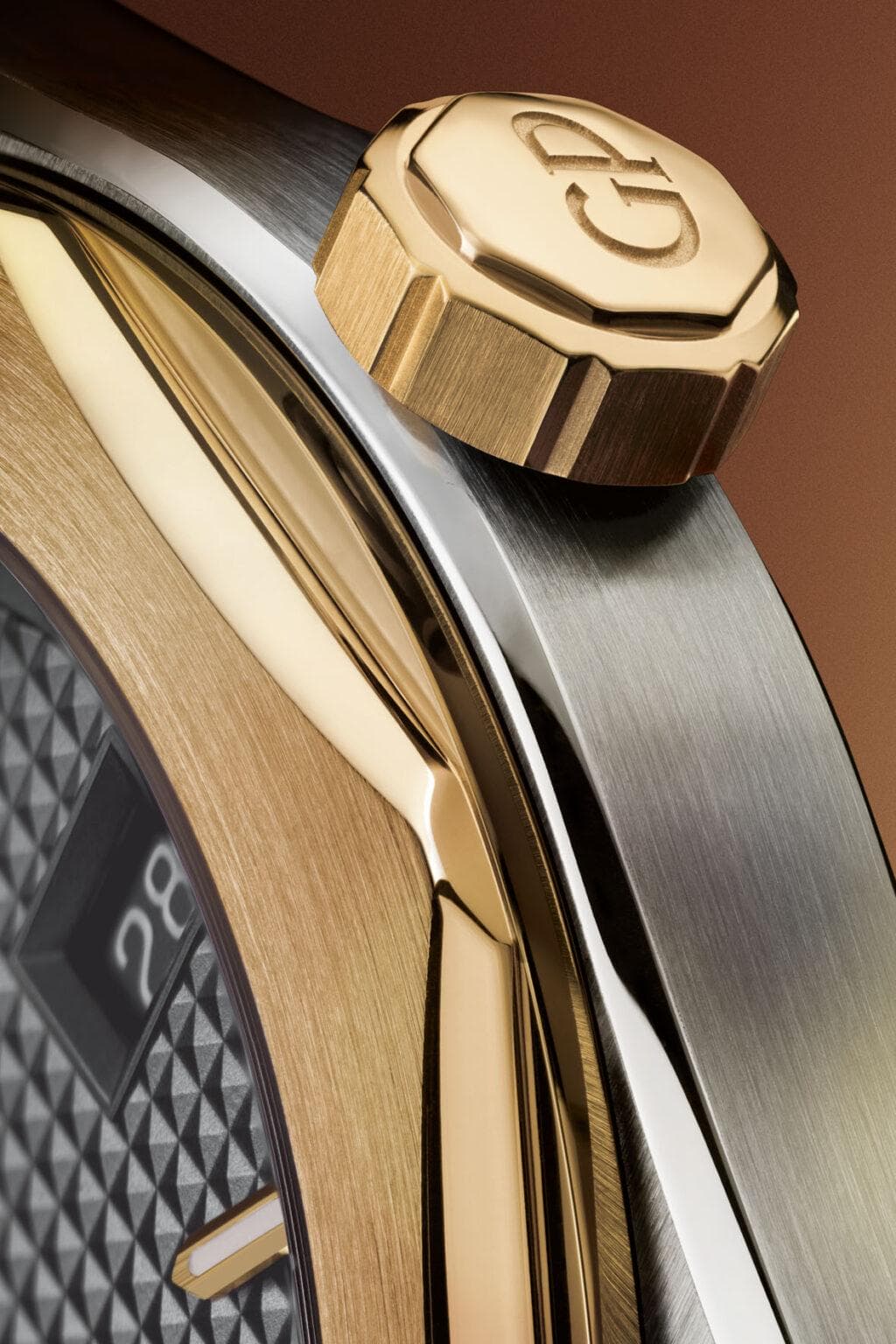
Moving on for now, some history is required for a watch like the Laureato Fifty, in part because it carries its past in its name. In 1975, no one thought the luxury sports watch was even trendy, even though the Laureato was the perfect expression of the decade. As it happens, the Laureato was even advertised in Italy with visuals from The Graduate because it was the watch for the gentleman who has arrived. A graduate, in other words, as Michel-Amadry told us. From our own previous Laureato adventures, with the last major update being in 2016, we know that the name itself was not part of the 1975 package. Not only was it absent from the dial but it was also not referred to this way (except in the Italian market). Crucially, it was also unique in the sports elegance category for debuting with an in-house quartz calibre.
Given that you are reading this story, that last bit will be about as shocking as a PG13 movie. With its GP350, Girard-Perregaux defined the technical characteristics of the quartz era to come, and the collection would not get a mechanical movement till the 1990s (circa 1995). Furthermore, in an era that heralded the emergence of the watch designer as a force, Girard-Perregaux went with an in-house design for the 1975 debut. It was not inspired by anything nautical and indeed, the brand has never said if anything specific informed the design decisions here. For the Laureato Fifty, all Girard-Perregaux will say is the following:
“In contrast to its contemporaries, such as Gérald Genta’s Royal Oak (1972), which is all angles and screws, or the Nautilus (1976), with its roundness inspired by a porthole but also by the traditional “cushion” shape, it favours precision, balance and elegance. From 1975, it embodied a new, more refined and subtle luxury… Directly inspired by the original model, this new creation embodies both fidelity to the historic design and the integration of the most advanced technologies.”
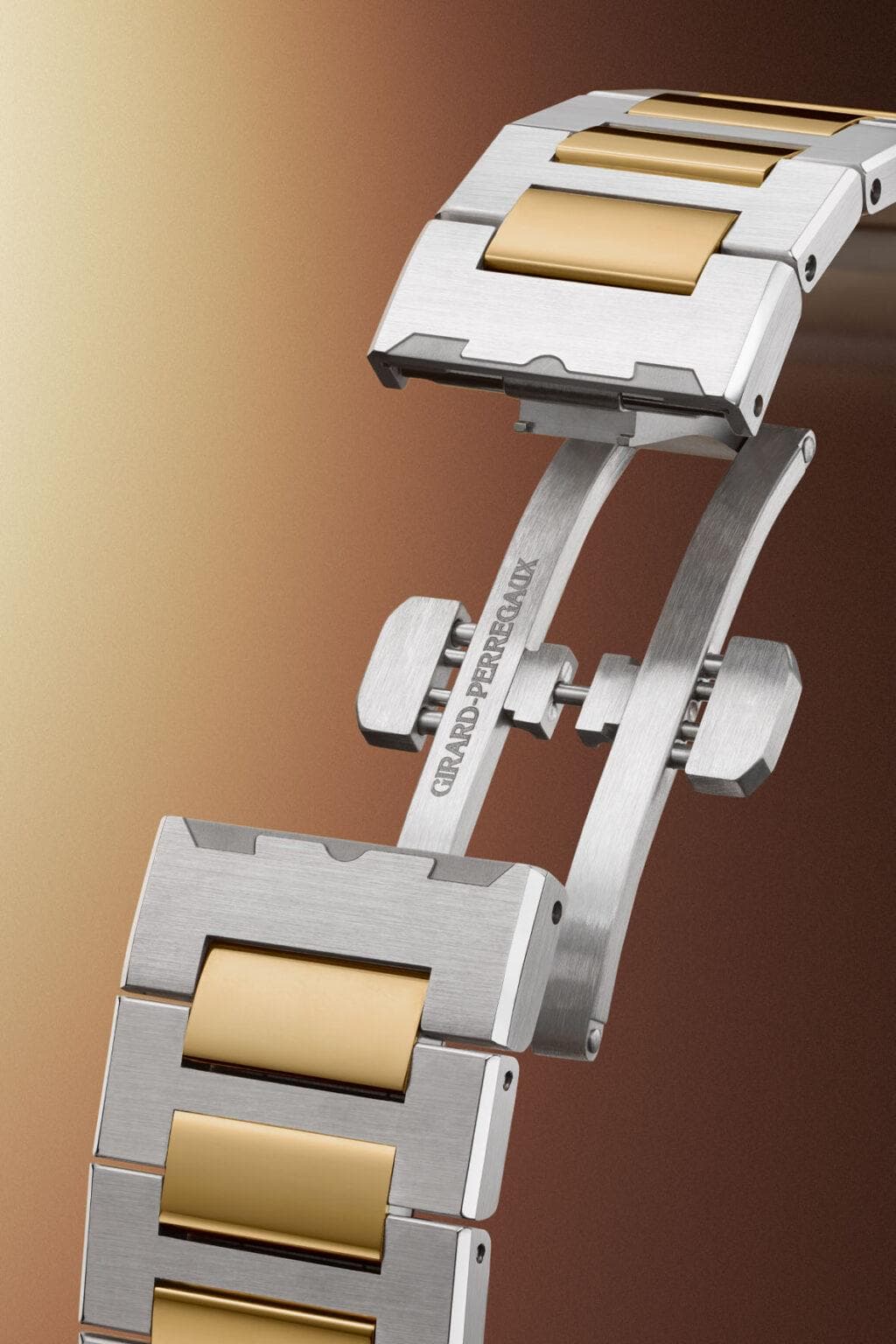
And then there is the matter of the bracelet, specifically the clasp, which greatly impressed us. This is in no way a slight because the Fifty has something most watches with an integrated bracelet need, yet do not have: fine adjustment without tools and without fuss. The triple folding clasp, which is as good as anything out there other than the patented Chanel one, expands by 4 millimetres on demand. I confess that I thought I might damage the watch trying to get this to work but of course, the bracelet is plenty sturdy enough to handle the forces that human hands muster.
As for the bracelet proper, it differs from the current one in other ways too, although it preserves the H-shaped links paired with polished centre links. According to Girard-Perregaux, those H-links are shorter for a more comfortable fit and we can say that there is not a lot of play between links. Everything is tight enough, and fitting just right, that hairy forearms need not fear. The links also visibly taper towards the clasp, which bears the bridge logo front and back in a very discreet style. All this bracelet needs now to elevate it past its peers is interchangeability, which we presume is still not quite up to Girard-Perregaux’s expectations.
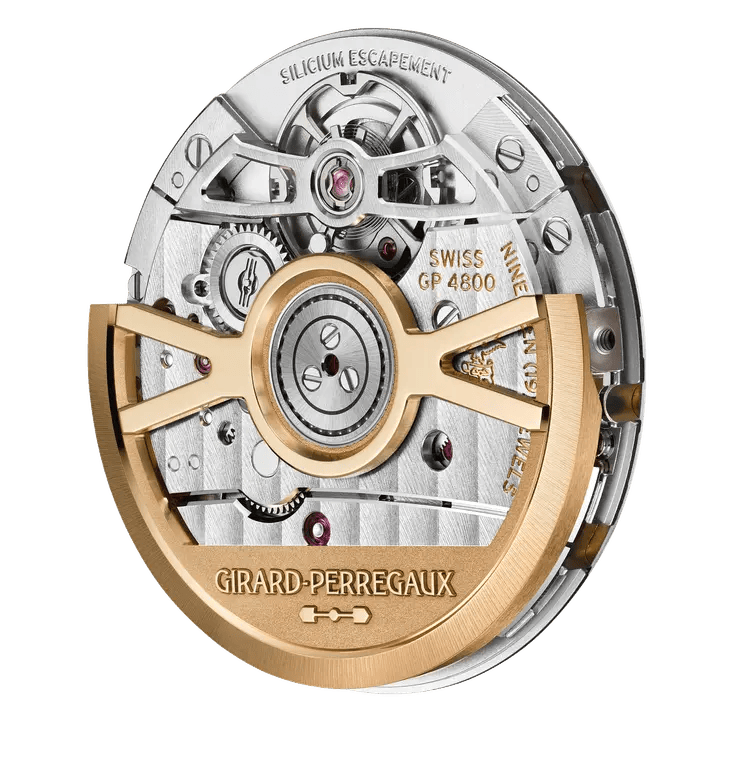
Returning to the movement to close things out, its most famous feature must be the silicon escape wheel and pallet fork, leaving the only remaining part of the assembly to not be in silicon as the hairspring. Clearly, there is a plan to fit such a spring here because the balance is adjusted via the telltale screws on the balance wheel, rather than by adjusting the spring itself (silicon hairsprings cannot be adjusted; they are manufactured as perfectly as possible).
In terms of price, a bimetallic reference like the Fifty is unusual, and is currently listed as SGD 41,200, or EUR 28,100. It compares quite well against the full gold (SGD 76,700) and steel (SGD 21,200) Laureato regular production variants, and also the aforementioned peers. We look forward to discovering the next chapter in this story.
This story was first seen as part of the WOW #82 Festive 2025 Issue
For more on the latest in luxury watch reads, click here.